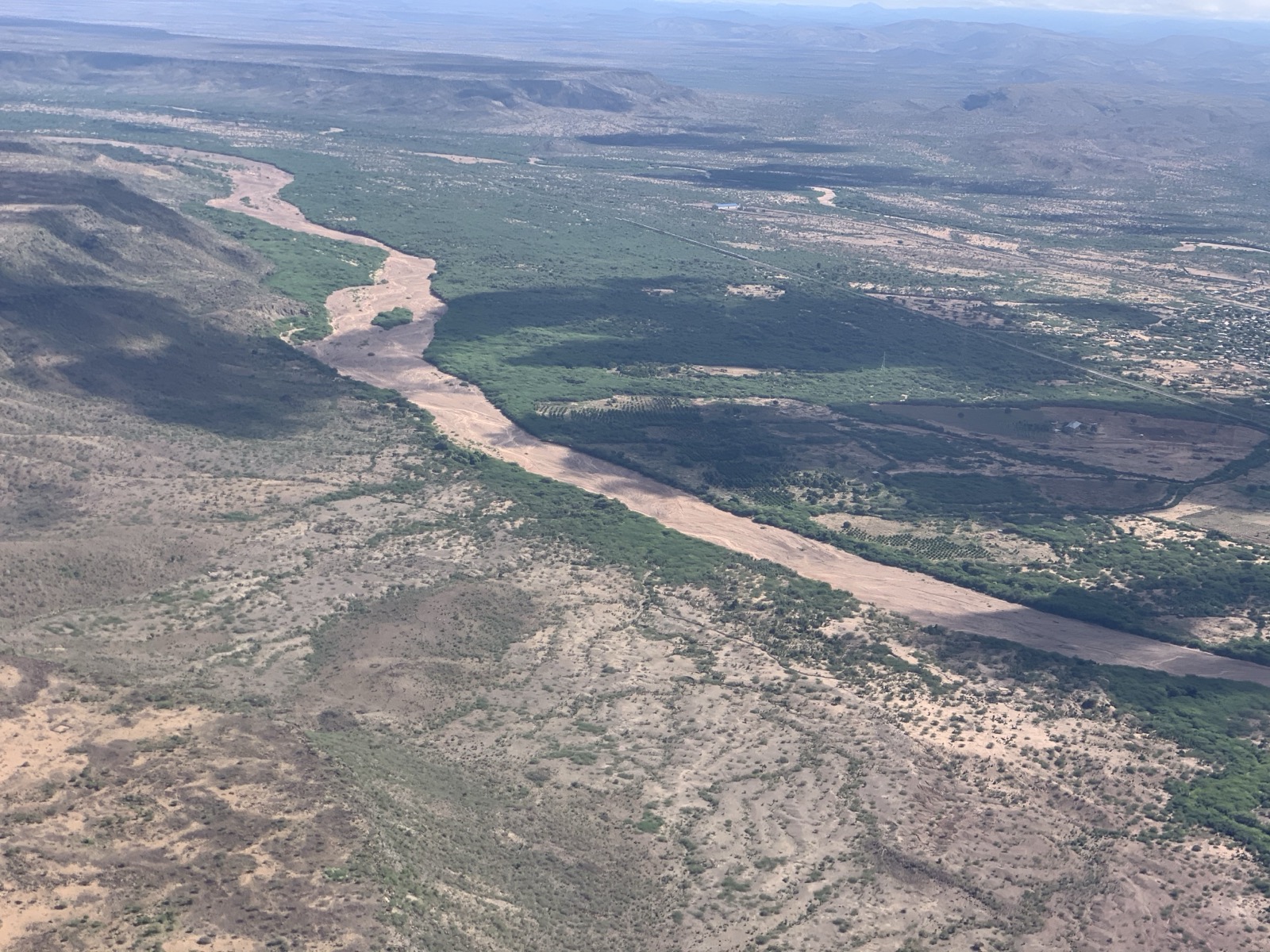
SUNCASA in Dire Dawa
SUNCASA works in the Dechatu River catchment through afforestation, agroforestry and buffer-zone planting. Local partners contribute delivery, community engagement and soil-moisture research.
Image credit
Kinyarwanda is an AI-drafted translation, provisional pending native and partner review.
Inside the project
SUNCASA works in the Dechatu River catchment through afforestation, agroforestry and buffer-zone planting. Local partners contribute delivery, community engagement and soil-moisture research.
By the end of 2024 (SUNCASA's first year), Dire Dawa reported 313,330 seedlings raised; afforestation of 128,550 trees on 60 hectares of a 105-hectare target; agroforestry of 142,600 trees on 131 hectares, exceeding a 115.5-hectare target; and buffer zones of 14 hectares with 42,000 trees and shrubs planted, 56 percent of that year's goal.
By 31 December 2025, IISD reported the programme at 70 percent of its afforestation target (over 500,000 trees across 246 hectares), 93 percent of its agroforestry target (nearly 380,000 trees across 359 hectares), and its buffer-zone target exceeded at 95 hectares, with 94 percent tree survival. IISD's SAVi economic assessment for Dire Dawa estimates USD 1.35 million in avoided flood-repair costs by 2050 and USD 930,000 in health savings, for an estimated 220,000 people.
Objectives
- Restore the Dechatu River catchment through afforestation, agroforestry and riparian buffer planting.
- Reach 70 percent of the afforestation target and 93 percent of the agroforestry target by the end of 2025.
- Sustain tree survival above 90 percent across planted sites.
- Contribute soil-moisture research (Haramaya University) to guide the intervention.
Approach
- The Dire Dawa Administration leads local implementation, working with Hararghe Catholic Secretariat on MEL coordination and GESI workshops, and Haramaya University on soil-moisture research; Professor Kibebew Kibret is named as deputy technical lead for Dire Dawa.
- IISD commissioned a SAVi economic assessment for Dire Dawa, following the same InVEST-based method used for Kigali, modelling flood and health benefits against intervention cost.
Restoration in a dryland catchment
Along the Dechatu, partners combine afforestation, farm trees and river buffers. The year-two account describes fruit growing as a livelihood opportunity and reports 94% tree survival across Dire Dawa’s work.
Publication date: 2026-04-10 · Read source
The programme’s film brings together field work and partner perspectives across the three cities.
IISD · Video publication date: · Featured in source published · Video in its original languageRelated SUNCASA cities
Sources
Inspect 3 sources
- iisd.org ↗https://www.iisd.org/suncasa
- iisd.org ↗https://www.iisd.org/articles/news/year-one-suncasa-progress-lessons-nature-based-solutions
- iisd.org ↗https://www.iisd.org/articles/success-story/how-sub-saharan-african-cities-building-climate-resilience
Explore related climate work
Find other projects and tools for monitoring, restoration and climate adaptation.
Browse projectsBrowse tools