Trees for the Future
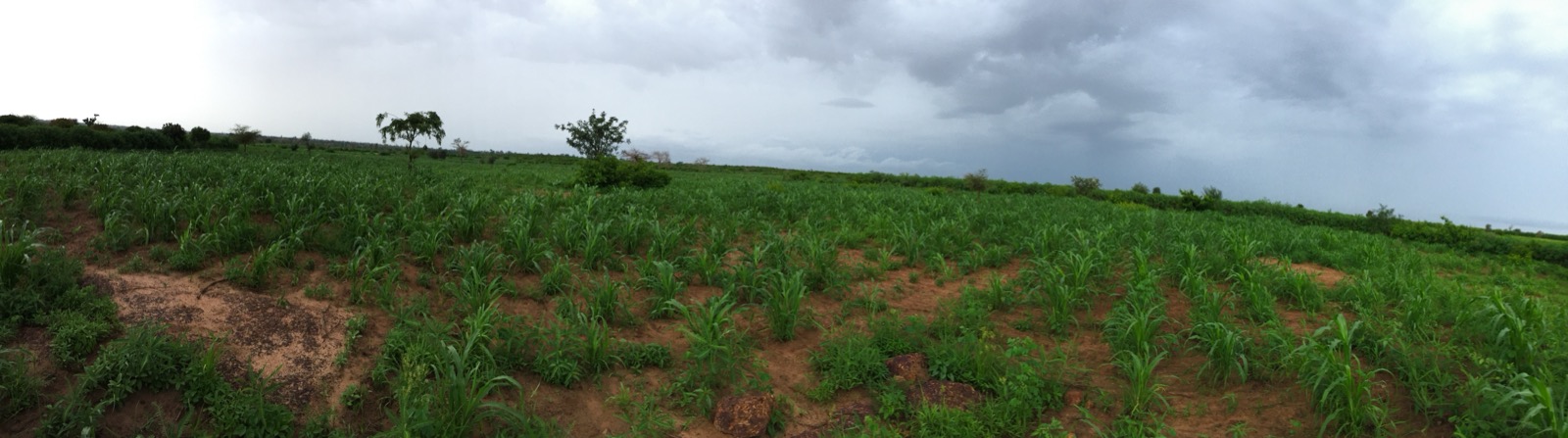
Trees for the Future trains smallholder farmers across Sub-Saharan Africa to plant multi-layered 'Forest Gardens' that combine trees with food and cash crops. In February 2024 the UN named TREES a World Restoration Flagship, and by April 2024 farmers had planted 350 million trees. The four-year, farmer-led approach restores soil, food systems, and incomes.
Image credit
Inside the project
TREES' signature Forest Garden Approach is a four-year, hands-on training program that walks each farming family from degraded land to a productive, multi-layered agroforestry system. An average Forest Garden holds roughly 2,500 to 4,000 trees planted as living fences, windbreaks, and field rows, interplanted with dozens of food and resource crops the family can eat and sell.
By restoring soil fertility and diversifying what grows on a single plot, the model is built to break the cycle of hunger and poverty: farmers gain year-round food, multiple income streams, and land that keeps producing instead of eroding. Since 1989 more than 63,000 farming families across Sub-Saharan Africa have turned over 100,000 acres into productive carbon-sink landscapes.
In February 2024 the UN Environment Programme and the Food and Agriculture Organization, through the UN Decade on Ecosystem Restoration, recognised TREES as one of seven World Restoration Flagships. As a Flagship it aims to restore 229,000 hectares of drylands across Senegal, Mali, Kenya, Tanzania, and Uganda by 2030, capturing an estimated 79.5 million metric tonnes of CO2 over twenty years.
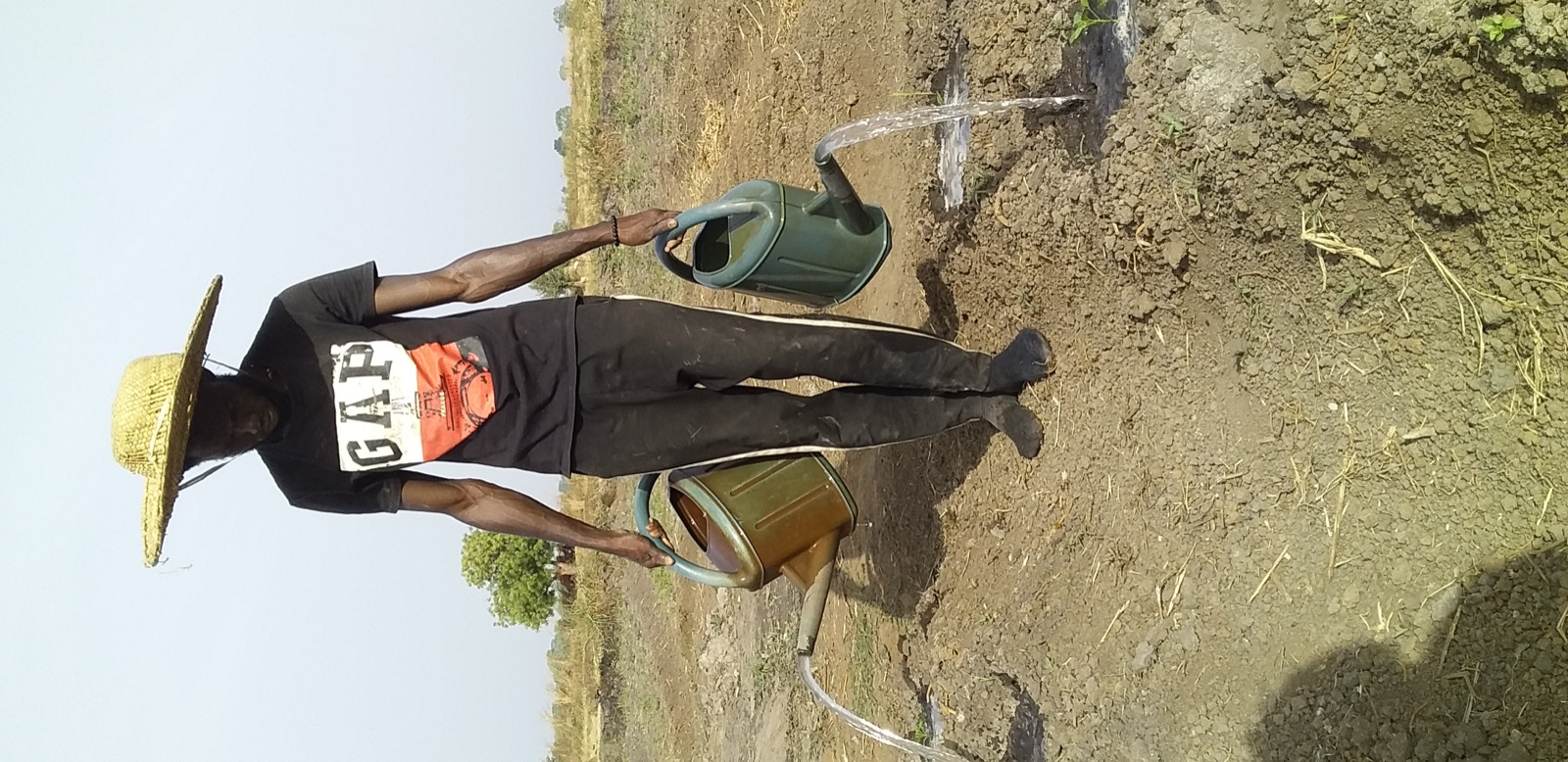
Image credit
Objectives
- Train smallholder farming families through a four-year Forest Garden program that regenerates soil and ends reliance on degrading practices
- Break the cycle of hunger and poverty by giving families year-round food and diversified income from trees and crops
- Restore degraded drylands at scale, targeting 229,000 hectares across five Sub-Saharan African countries by 2030
- Sequester carbon and build climate resilience, with an estimated 79.5 million tonnes of CO2 captured over twenty years
Approach
- TREES measures impact at the Forest Garden level, tracking hectares restored, households supported, and carbon captured per hectare. Its Flagship reporting cites 41,345 hectares restored since 2014, over 50,000 households supported, and roughly 347 metric tonnes of CO2 captured per hectare, feeding into the projected 79.5 million tonnes of CO2 over twenty years and 230,000 jobs expected by 2030.
- In 2025 TREES published a revised, science-backed Forest Garden Training Manual (a Technical Manual for Trainers), co-created with farmers and built on more than 30 years of field experience, and produced with support from UNEP and FAO under the UN Decade on Ecosystem Restoration. The manual codifies the monitoring and training methodology so it can be replicated by other practitioners.
Sources
Inspect 5 sources
- trees.org ↗https://trees.org/2024/02/13/flagship/
- trees.org ↗https://trees.org/2024/04/25/350-million-trees-planted/
- decadeonrestoration.org ↗https://www.decadeonrestoration.org/un-decade-flagship-trees-future-releases-science-backed-farmer-driven-guide-climate-resilient
- unep.org ↗https://www.unep.org/news-and-stories/press-release/nature-staging-comeback-un-recognizes-seven-world-restoration
- en.wikipedia.org ↗https://en.wikipedia.org/wiki/Trees_for_the_Future
Explore related climate work
Find other projects and tools for monitoring, restoration and climate adaptation.
Browse projectsBrowse tools