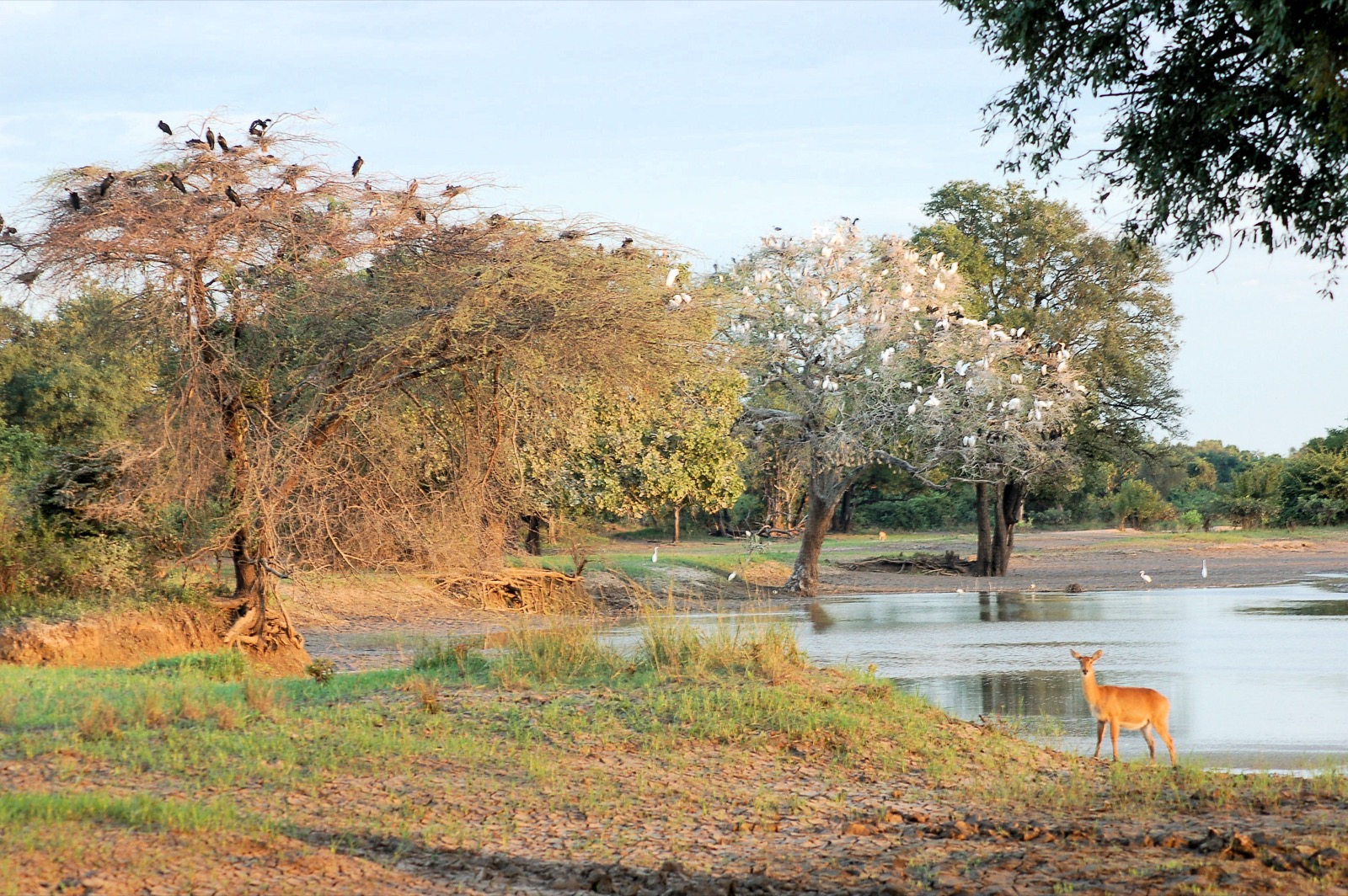
Makame Savannah REDD+
A Maasai-governed dryland REDD+ project that pairs community land rights with payments for keeping forest standing across a Wildlife Management Area in northern Tanzania.
Image credit
Inside the project
Makame Savannah is a community REDD+ project run by Carbon Tanzania in partnership with five Maasai communities that govern the Makame Wildlife Management Area, an area of roughly 350,000 hectares.
Within that landscape, around 104,065 hectares of Acacia-Commiphora dryland forest are the focus of protection against clearance for agriculture and charcoal.
The project is registered under Verra's VCS programme and has been certified to the CCB Standard at Triple Gold level for climate, community and biodiversity benefits.
As viewed in September 2026, Verra's registry lists VCS 1900 with Carbon Tanzania as proponent, 1,239,936 units issued and 901,185 retired, and a verification approval requested.
Objectives
- Reduce clearance of dryland forest by supporting community land-use planning and enforcement.
- Channel carbon revenue to the participating Maasai communities under agreed benefit-sharing arrangements.
- Sustain wildlife habitat and rangeland connectivity across the Wildlife Management Area.
Approach
- Community-held land-use plans and village bylaws define where forest is protected.
- Local rangers and community scouts monitor for unplanned clearance and support enforcement.
- Emission reductions are quantified against a project baseline and verified under VCS; avoided-deforestation figures reflect that modelled baseline rather than a directly measured counterfactual.
Published documents
Academic study: Making REDD+ Work for Communities and Forest Conservation in Tanzania (REDD+ on the Ground casebook) →Academic study: Action needed to make carbon offsets from tropical forest conservation work for climate change mitigation →Independent evaluation: REDD+ projects falling far short of claimed carbon cuts, study finds →Monitoring report: Makame Savannah REDD, Verra registry page (VCS 1900) →
Sources
Inspect 3 sources
- carbontanzania.com ↗https://carbontanzania.com/projects/makame-savannah/
- icvcm.org ↗https://www.icvcm.org/case_study/protecting-valuable-dryland-forests-from-destruction-in-tanzania/
- registry.verra.org ↗https://registry.verra.org/app/projectDetail/VCS/1900
Explore related climate work
Find other projects and tools for monitoring, restoration and climate adaptation.
Browse projectsBrowse tools