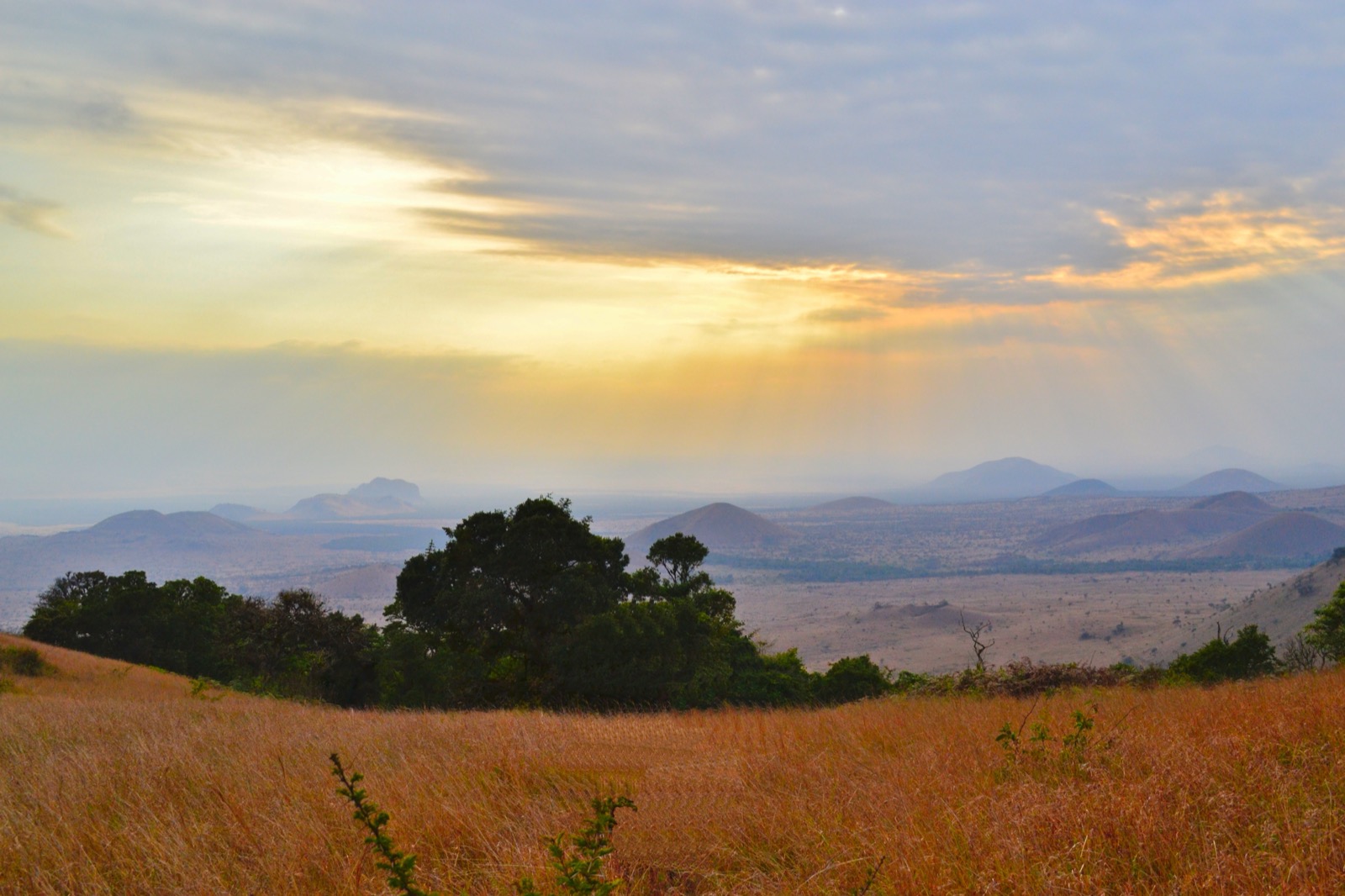
Humbo Assisted Natural Regeneration
On barren hillsides above Lake Abaya, seven community cooperatives regrew 2,728 hectares of indigenous forest from living rootstock, and in doing so registered the first large-scale afforestation and reforestation project in Africa under the Kyoto Protocol.
Image credit
Inside the project
Humbo restores degraded, deforested hillside above Lake Abaya in the SNNP region of southwest Ethiopia. Rather than planting seedlings, the project uses Farmer Managed Natural Regeneration (FMNR), regrowing forest from the surviving stumps and root systems of previously cleared indigenous trees.
It was the first large-scale afforestation and reforestation project registered in Africa under the Kyoto Protocol's Clean Development Mechanism, and the first forestry project on the continent to earn UN-administered carbon credits. The project has since transitioned to the Gold Standard (GS ID 10220).
Land is managed by seven local community cooperatives that hold user rights to the regenerating forest, giving residents a direct stake in protecting the recovering landscape.
The World Bank’s 11 October 2012 account documents the historical cooperative structure and CDM crediting. The Gold Standard record cited in earlier material was not retrievable in the 17 September 2026 check; the historical source does not verify current registry standing.
Objectives
- Restore degraded hillside forest above Lake Abaya to reduce erosion, flooding and landslide risk.
- Generate carbon revenue for participating communities through verified sequestration.
- Establish community-managed forest cooperatives with secured land-use rights.
- Demonstrate Farmer Managed Natural Regeneration as a scalable, low-cost restoration model.
Approach
- Farmer Managed Natural Regeneration: pruning and protecting existing rootstock rather than planting new seedlings.
- Formal transfer of forest user rights to seven community cooperatives.
- Carbon finance channelled through the World Bank BioCarbon Fund as buyer of the sequestration.
- Transition from the original CDM registration to Gold Standard for ongoing crediting.
Sources
Inspect 3 sources
- worldbank.org ↗https://www.worldbank.org/en/news/feature/2012/10/09/ethiopia-climate-project-receives-africa-s-first-forestry-carbon-credits
- worldvision.org ↗https://www.worldvision.org/economic-empowerment-news-stories/ethiopia-forest-project-united-nations-carbon-credits
- blogs.worldbank.org ↗https://blogs.worldbank.org/en/climatechange/how-small-grant-helped-lead-way-greener-landscape-humbo-ethiopia
Explore related climate work
Find other projects and tools for monitoring, restoration and climate adaptation.
Browse projectsBrowse tools