Green Aral Sea
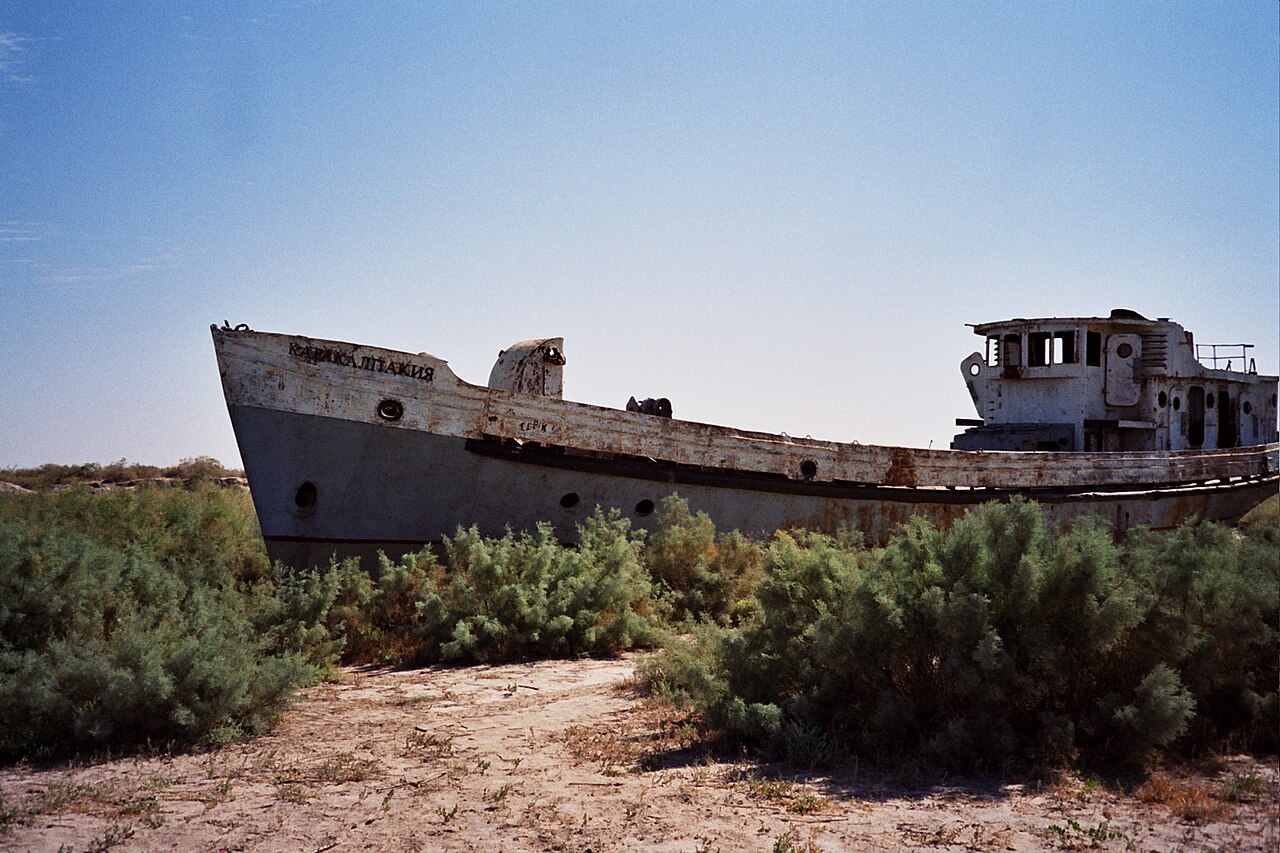
UNDP created the Green Aral Sea crowdfunding platform on 11 March 2020 so that donations go directly to buying and planting saxaul seedlings on the dried bed of the Aral Sea, where salt and sand storms spread from what is now the Aralkum desert. By March 2025 it counted 823,000 trees planted on 658.2 hectares.
Image credit
Inside the project
The March 2025 stage planted 80,000 saxaul seedlings on 80 hectares at the Akpetki site in Muynak district, within a UNDP project on climate-resilient agriculture in the Aral Sea region funded by the Government of Japan.
Donors can follow on the initiative's website how much has been raised and where it is planted. Seedlings come from local nurseries of the Chimbay State Forestry and are planted by hand on a 10 by 1 metre grid.
UNDP describes the plantings as a small part of the work: the dried Aral Sea bed in Uzbekistan covers 2.7 million hectares.
Objectives
- Stabilise mobile sand and cut salt-dust storms from the dried Aral Sea bed
- Test methods that raise saxaul survival in saline, arid conditions
Approach
- Saxaul seedlings grown in local nurseries are planted by hand where sand storms are strongest, funded directly by public donations.
- Trials test survival aids: a moisture-retaining preparation on 1,000 seedlings in 2024, and dipping roots in a manure and clay mix on 20 hectares in 2025.
Sources
Inspect 1 source
- undp.org ↗https://www.undp.org/uzbekistan/green-aral-sea
Documented by one public source so far.
Explore related climate work
Find other projects and tools for monitoring, restoration and climate adaptation.
Browse projectsBrowse tools