Oceanium / Livelihoods Carbon Fund
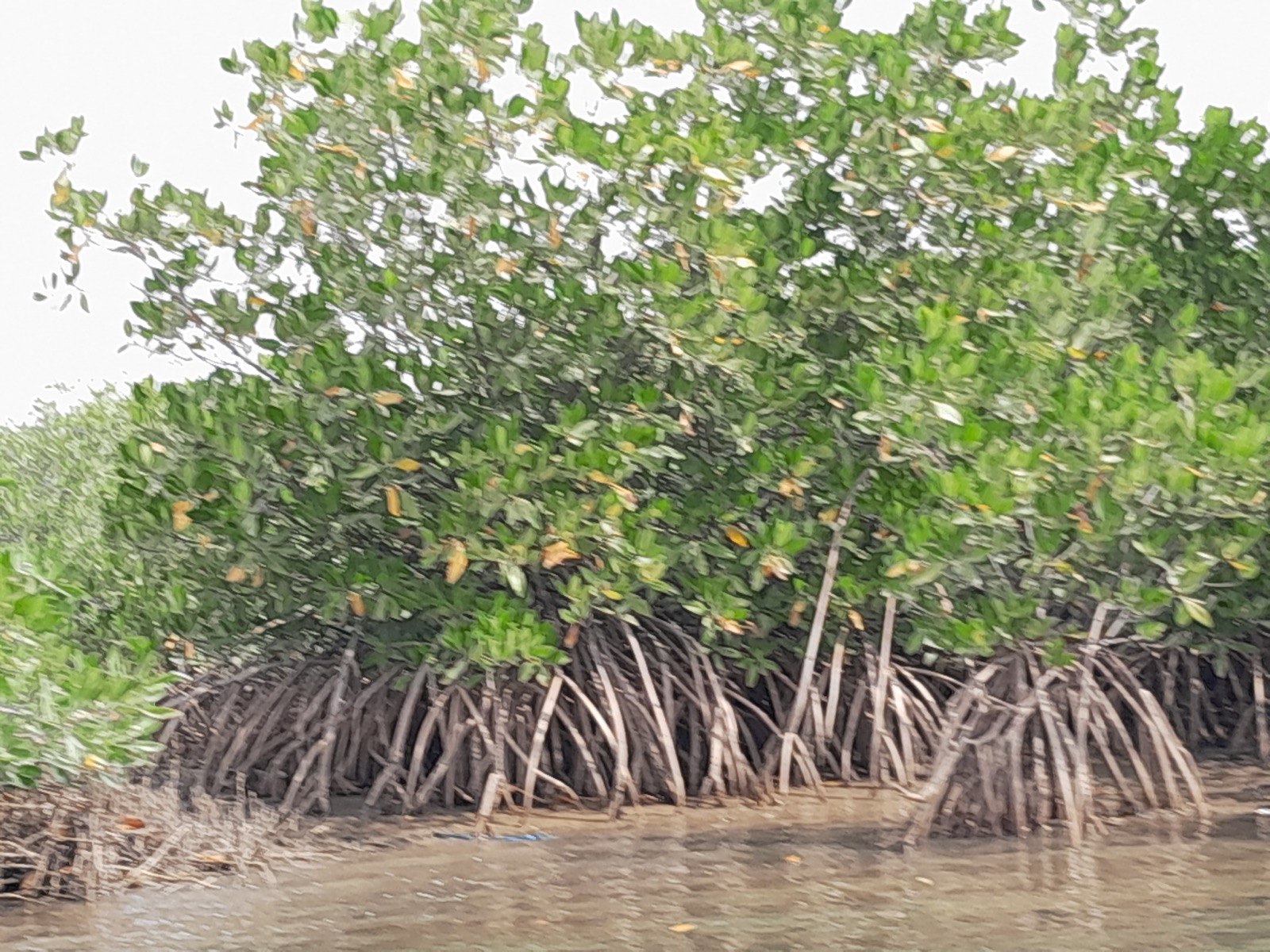
The Oceanium / Livelihoods Carbon Fund program in Senegal is the world's largest mangrove restoration effort: roughly 79 to 80 million mangroves replanted across about 10,000 hectares of the Casamance and Sine-Saloum deltas. Implemented by the Senegalese NGO Océanium and financed by the Livelihoods Carbon Fund with founding backing from Danone, it mobilized some 350 to 450 villages and around 100,000 people, and is expected to sequester roughly 600,000 tonnes of CO2 over 20 years.
Inside the project
Senegal's mangrove estuaries, about 185,000 hectares concentrated in the Casamance and Sine-Saloum deltas, buffer the coast, protect rice paddies from saltwater intrusion, and nurse the fisheries that coastal communities depend on. Roughly a quarter of that mangrove had been lost since the 1970s. Starting in 2008, the NGO Océanium began organizing villages to replant.
With founding support from Danone and then the Livelihoods Carbon Fund, the effort scaled dramatically: about 80 million mangroves were planted over roughly three years from 2009, across some 10,000 hectares, involving 350 to 450 villages and around 100,000 people. The project is certified under Verra's VCS standard.
A 10-year independent impact study completed in 2018 found approximately 160,000 tonnes of CO2 already sequestered and around 4,200 tons of additional fish, shrimp and oysters produced each year. The program has also drawn scrutiny over tree survival and permanence, precisely the kind of contested claim that robust MRV must settle.
Objectives
- Replant ~80 million mangroves across degraded estuaries
- Restore fisheries productivity and protect rice paddies
- Engage 350+ villages and ~100,000 people in planting
- Sequester ~600,000 tonnes CO2 over a 20-year horizon
- Demonstrate verifiable survival and permanence
Approach
- Carbon accounting follows the Verra VCS methodology, with a Project Design Document prepared in 2010, an early audit by Ernst & Young in 2011, and sequestration tracked against the 20-year baseline (about 160,000 tCO2e verified by 2018).
- Independent social and ecological impact monitoring was carried out by the La Tour du Valat institute in 2018 across some 50 villages, while tree survival and permanence remain points of external scrutiny.
Run a project like this on Straatos.
See how a project like Oceanium / Livelihoods Carbon Fund runs on Straatos, from field data and satellite analytics through registry submission to the issued credit.